
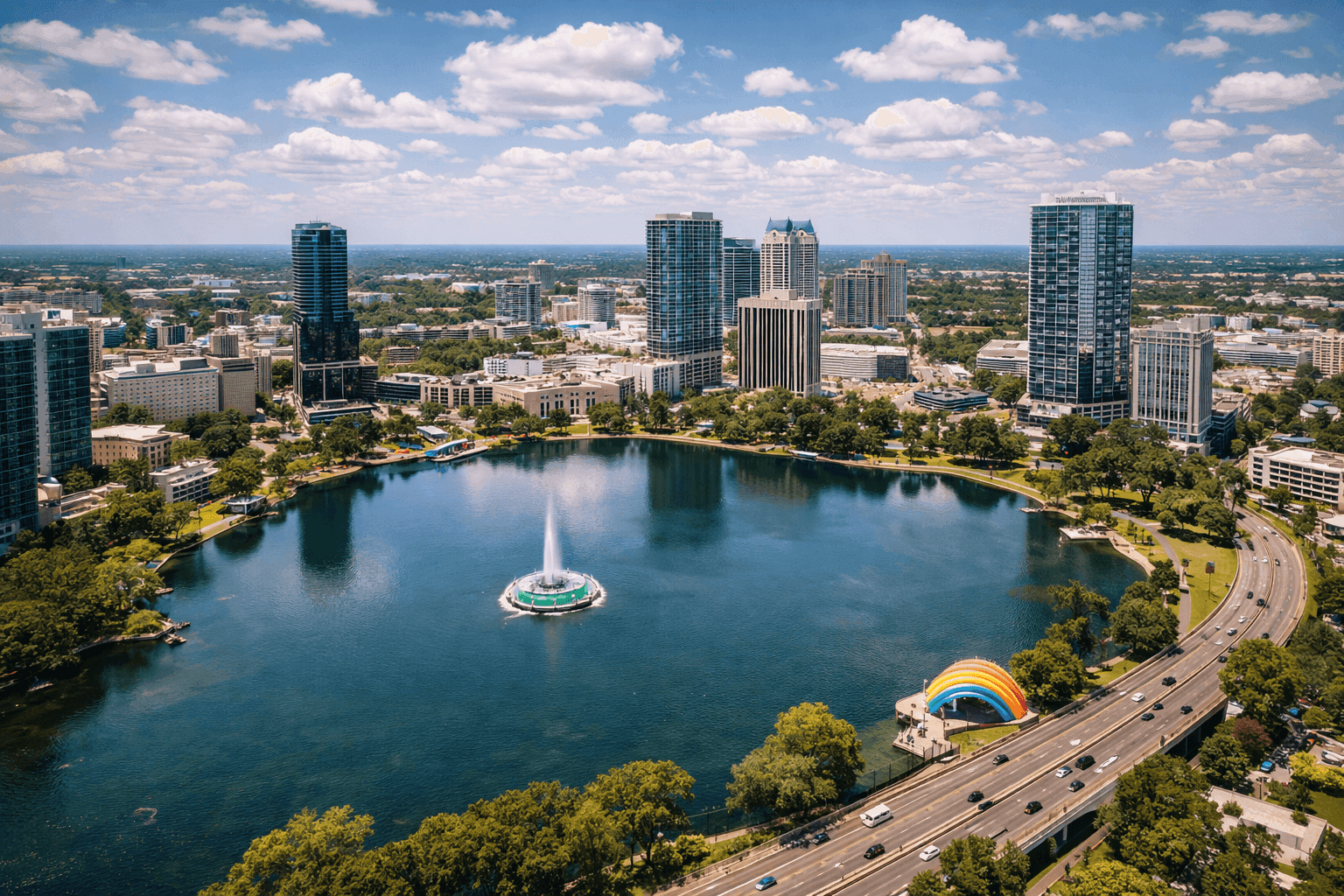
Orlando Truck Accident Lawyer
Orlando Semi-Truck, 18-Wheeler & Commercial Vehicle Crash Attorneys
Experienced attorneys handling complex commercial truck accident claims. Serving Orlando, Orange County, and all of Florida.
Taking On
Big Trucking Companies
Every Type of Truck, Every Orlando Highway
From 80,000-pound semis and 18-wheelers to delivery vans, dump trucks, and hazmat tankers, our Orlando attorneys handle every class of commercial-vehicle crash across the metro — I-4, SR 408, SR 417, Florida's Turnpike, Colonial Drive, and Orange Blossom Trail. Whatever struck you and wherever it happened in Orange, Seminole, or Osceola County, we know the carriers, the courts, and the federal rules that apply.
Multiple Liable Parties in Every Crash
Orlando truck accidents rarely involve just one negligent party. The driver may have been fatigued after hauling freight from the Port of Tampa. The carrier may have falsified ELD records. The cargo loader at an International Drive warehouse may have overloaded the trailer. We investigate every link in the chain — driver, trucking company, broker, shipper, and maintenance provider — so no responsible party escapes accountability.
Catastrophic & Wrongful Death Focus
When an 80,000-pound semi collides with a passenger car on I-4 or the 408 Expressway, the injuries are rarely minor. Our Orlando team handles the most severe truck crash outcomes — traumatic brain injuries, spinal cord damage, crush injuries, amputations, and wrongful death — and we have the medical experts, life-care planners, and forensic economists to prove the full lifetime cost.
Orlando's Deadliest Crashes,
Complex Federal Claims
Central Florida's booming economy means thousands of commercial trucks travel I-4, SR 408, SR 417, and Florida's Turnpike every day — hauling freight to theme parks, distribution centers, and construction sites. A fully loaded tractor-trailer weighs up to 80,000 pounds — 20 times the weight of a passenger car. When these rigs cause crashes on Orlando's congested highways, the injuries are catastrophic and the legal claims are among the most complex in personal injury law.
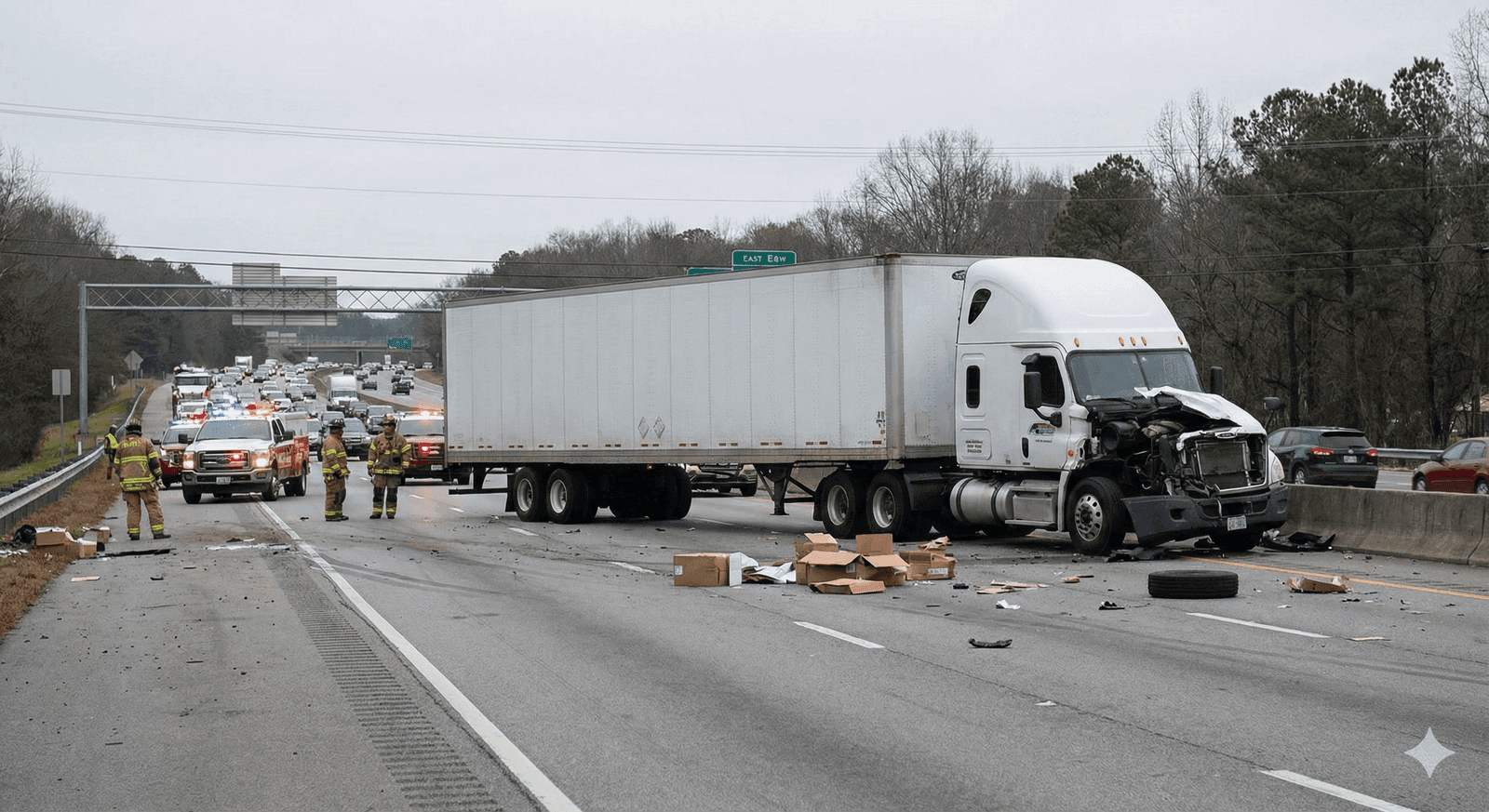
Your Path to Recovery
We handle the legal complexities so you can focus on healing.
Same-Day Crash Site Investigation
Our office is in downtown Orlando at 135 W Central Blvd. When a client calls after a truck wreck on I-4, the 408, or Orange Blossom Trail, our investigation team can be at the scene the same day. We photograph skid marks, debris fields, and road conditions before they are cleared. We send spoliation letters to the trucking company within hours — demanding preservation of the truck's black box data, dashcam footage, ELD logs, driver qualification files, and maintenance records.

FMCSA Compliance Audit
We subpoena the carrier's full FMCSA safety record from the SaferSys database — including out-of-service rates, crash history, and inspection results. We audit the driver's hours-of-service logs for violations, check whether the carrier ran required drug and alcohol tests, verify CDL credentials, and compare actual cargo weight against federal and Florida bridge-formula limits. Violations become powerful evidence of negligence.

Full Lifetime Damage Assessment
Truck accident injuries often require treatment at Orlando Regional Medical Center, AdventHealth Orlando, or Nemours Children's Hospital. We coordinate with your treating physicians and retain independent medical experts to project future surgeries, rehabilitation, and long-term care. Forensic economists calculate lost earning capacity. Life-care planners quantify the decade-by-decade cost of living with a permanent disability — so the trucking company's insurer cannot lowball your claim.

Aggressive Litigation in Orange County
If the trucking company's insurer won't pay fair value, we file suit in the Orange County Courthouse and litigate before the Ninth Judicial Circuit Court. Our attorneys have tried cases in front of Orange County juries and understand the local court procedures, assigned judges, and jury expectations. Trucking companies carry $1M–$5M policies — we have the trial experience to make those policies pay.

Orlando Truck Accident Lawyer — Fighting for Semi Truck and 18-Wheeler Crash Victims
At HOV Law, we represent Orlando truck accident victims exclusively on a contingency-fee basis — you pay nothing unless we recover compensation for you. Our office is located at 135 W Central Blvd in downtown Orlando, minutes from the Orange County Courthouse where we file and litigate truck crash lawsuits. We understand that trucking companies and their corporate insurers begin building their defense within hours of a collision. That is why we move immediately — preserving black box data, driver logs, maintenance records, and surveillance footage before it can be destroyed or overwritten.
If you or a family member was injured in a truck accident anywhere in the Orlando area — on I-4, SR 408, Colonial Drive, Orange Blossom Trail, or any other road in Orange County — contact HOV Law at (407) 801-0101 for a free, no-obligation case review.
Why Truck Accident Victims in Orlando Choose HOV Law
Same-Day Evidence Preservation — Trucking companies dispatch their own lawyers and investigators to crash scenes within hours. HOV Law responds just as fast. On the day you call, we send formal spoliation letters demanding preservation of the truck's Event Data Recorder (EDR/black box), Electronic Logging Device (ELD) records, forward and driver-facing dashcam footage, dispatch communications, driver qualification files, and maintenance records. We seek emergency court orders when carriers attempt to destroy evidence.
Truck-Specific Expertise — We know the Federal Motor Carrier Safety Administration (FMCSA) regulations that govern every commercial truck on I-4 and Orlando's roads. We subpoena SaferSys safety records, audit ELD data for hours-of-service violations, and retain commercial vehicle accident reconstruction engineers and biomechanical experts who understand the physics of 80,000-pound impacts.
Orange County Court Experience — Our attorneys have tried cases in front of Orange County juries. We know the assigned judges, local court procedures, and the way Central Florida juries evaluate truck accident claims. This local trial experience is what forces trucking company insurers to negotiate seriously rather than litigate indefinitely.
No Fee Unless We Win — HOV Law handles every Orlando truck accident case on a contingency fee basis. You pay zero upfront. Zero out-of-pocket expenses during the case. We are paid only when we recover compensation for you. If we do not win, you owe nothing.
Meet Your Orlando Truck Accident Attorney — Serge Hovhanessian, Esq.
When you hire HOV Law, a trial attorney stays personally involved in your truck accident case from the first spoliation letter through trial, supervising the strategy with the support of the firm's legal team. HOV Law was founded by Serge Hovhanessian, Esq., who leads the firm's Orlando personal injury and truck accident practice.
Truck Accident Cases We Handle in Orlando
- Every truck accident case in Orlando is different—the type of truck, the road, the cargo, the liable parties, and the extent of the injuries all affect the legal strategy. Our attorneys have experience across the full spectrum of commercial vehicle collisions in Central Florida:
- 18-Wheeler and Tractor-Trailer Rear-End Crashes on I-4—A loaded semi traveling at 65 mph needs nearly 500 feet to stop. When a tractor-trailer rear-ends a passenger vehicle in slowed I-4 traffic near the I-4/408 interchange or the SR 417 split, the results are catastrophic. We handle these cases from the first preservation letter through trial, building liability from EDR braking data, ELD fatigue logs, and the carrier's SaferSys out-of-service history.
- Semi-Truck Jackknife Crashes in I-4/SR 408 Construction Zones—Active work zones along I-4 Ultimate and the SR 408 corridor narrow lanes, shift merge points, and reduce visibility for heavy trucks. When a jackknife closes multiple lanes and triggers a chain-reaction pileup, multiple plaintiffs compete for a single set of insurance proceeds. Our attorneys handle multi-plaintiff truck crash litigation and ensure our clients are not undercompensated because of policy-limit disputes.
- Delivery Truck and Amazon DSP Crashes in Orlando Neighborhoods—Last-mile delivery vans operate on crushing schedules in residential areas like Lake Nona, Baldwin Park, Dr. Phillips, and Avalon Park. Backing crashes, side-swipes, and pedestrian/cyclist impacts are common. We identify whether the driver was a direct employee or a delivery service partner (DSP) contractor — a distinction that determines whether Amazon, FedEx, UPS, or another major corporation is the correct defendant.
- Commercial Box Truck Crashes Near Downtown Orlando—Medium-duty box trucks serving businesses along Orange Avenue, Church Street, and the International Drive corridor frequently cause intersection collisions and wide-turn squeeze-play crashes. These cases often involve inadequately trained non-CDL drivers whose employers are liable for negligent hiring.
- Fatal Truck Accident and Wrongful Death Cases—When an 80,000-pound commercial vehicle takes a life, HOV Law pursues wrongful death claims under Florida Statute § 768.16–768.26. Surviving spouses, children, and parents may recover lost financial support, funeral and burial expenses, loss of companionship and guidance, and mental pain and suffering. We handle these cases with the urgency they demand — beginning evidence preservation the day we are retained.
- Fatal Dump Truck and Construction Vehicle Crashes—The Central Florida construction boom sends thousands of dump trucks, cement mixers, and aggregate haulers onto local roads daily. When a dump truck causes a fatal crash near an Orange County construction site or exceeds posted weight limits on SR 50 or SR 429, both the operator and the construction contractor may be liable. We pursue all responsible parties.
- Cargo Spill and Tanker Rollover Cases on Florida's Turnpike and SR 417—Tanker trucks and flatbeds hauling hazardous materials or improperly secured loads create some of the most dangerous multi-vehicle incidents on Florida's high-speed toll roads. We handle the full complexity of cargo spill cases — including hazmat liability under federal environmental statutes and claims against the shipper or cargo loader in addition to the carrier.
Why Orlando Truck Accident Cases Require Specialized Legal Representation
- Truck accident claims in Orlando are fundamentally different from standard car accident cases. The reasons are structural, and they favor the trucking company unless you have an attorney who knows how to level the playing field. If you are still weighing whether to hire counsel, our guide on whether you need a lawyer for a Florida truck accident explains when going it alone costs victims money:
- Federal Motor Carrier Safety Administration (FMCSA) Regulations — Every commercial motor vehicle operating on Orlando's roads is subject to a dense body of federal safety rules. These include hours-of-service limits (a driver cannot drive more than 11 consecutive hours after 10 hours off duty), mandatory electronic logging device (ELD) usage, pre- and post-trip vehicle inspection requirements, CDL qualification standards, and drug and alcohol testing protocols. For a deeper look at how these federal limits work, see our guide on FMCSA hours of service rules. When a trucking company or driver violates any of these regulations, it creates direct evidence of negligence that strengthens your claim.
- Multiple Liable Parties — In a car accident, you typically have one at-fault driver and one insurance policy. In an Orlando truck accident, liability can extend to the truck driver, the motor carrier (trucking company), the freight broker who arranged the load, the shipper or cargo loader, the trailer owner, the maintenance contractor, and even the truck or parts manufacturer. Each party may carry separate insurance. See our complete guide on who is liable for a truck accident in Florida. Our attorneys trace liability across every responsible entity to maximize your recovery.
- Evidence Destruction Risk — Trucking companies are legally required to retain certain records, but in practice, critical evidence disappears quickly. ELD data can be overwritten after a set period. Dashcam and surveillance footage is routinely deleted. Trucks are repaired or scrapped. Drivers are reassigned. Learn what evidence matters most in our guide on truck accident black box and ELD evidence. Our firm sends preservation demands within hours of being retained and, when necessary, seeks emergency court orders to prevent spoliation. If you have not yet retained anyone, do not wait: our free evidence preservation letter builder composes the notice — every record, the federal rule that governs it, and the § 627.4137 insurance-disclosure demand — in a few minutes, entirely in your browser.
- High-Value Insurance Policies—Florida law requires commercial trucks to carry minimum liability coverage of $750,000, and most long-haul carriers maintain policies between $1 million and $5 million. While this means substantial compensation is available, it also means the insurance company will fight aggressively to deny or minimize your claim. These insurers retain national defense firms with massive resources — and you need attorneys who can match them.
Dangerous Truck Accident Corridors in the Orlando Metro Area
- Certain roads and intersections in the Orlando area see a disproportionate number of serious truck collisions. The scale is documented:FLHSMV crash data shows Orange County logs roughly 2,600 commercial motor vehicle crashes in a single year — injuring nearly 1,000 people and killing a dozen or more — among the highest county totals in Florida. Our attorneys have handled crash cases on all of these corridors:
- Interstate 4 (I-4) — I-4 has been called the deadliest highway in America by multiple traffic safety organizations. The stretch through Orlando — from the I-4/I-275 junction in Hillsborough County through Orange and Seminole counties — sees heavy truck congestion, construction zones, and frequent rear-end and jackknife collisions. The I-4 Ultimate expansion project has added additional complexity, with shifting lanes, narrow shoulders, and temporary barriers that are especially hazardous for large trucks. For crashes on this corridor specifically, see our dedicated Orlando I-4 truck accident lawyer page.
- SR 408 (East-West Expressway)—The 408 is a primary freight route connecting I-4 to Orlando's east side and the 417. Commercial trucks use it to reach distribution centers, the Orlando International Airport cargo area, and the tourism corridor along International Drive. Merging and lane-changing conflicts between trucks and passenger cars are a common crash factor.
- Colonial Drive (SR 50)—This six-lane arterial road runs east-west through the center of Orlando and carries high volumes of local truck traffic — delivery vehicles, construction equipment, and medium-duty commercial trucks serving businesses along the corridor. Intersection collisions, especially involving trucks making wide turns, are frequent.
- Orange Blossom Trail (US 441/17-92)—OBT is one of the most heavily traveled and dangerous roads in Orange County. It carries a mix of freight trucks, local delivery vehicles, and passenger traffic. Poor lighting, high speeds, and frequent driveway access points make truck accidents on OBT particularly deadly.
- Florida's Turnpike & SR 417 (GreeneWay)—These toll roads carry long-haul freight traffic between Orlando and South Florida. The high speed limits and long straight sections lead to fatigued-driving crashes, tire blowouts at highway speed, and catastrophic rear-end collisions when trucks fail to slow for toll plazas or exit ramps.
- High-Crash Truck Intersections—The same Orange County intersections surface repeatedly in commercial vehicle crash reporting: Colonial Drive (SR 50) & Semoran Boulevard (SR 436), Colonial Drive & John Young Parkway, Orange Blossom Trail & Oak Ridge Road, Kirkman Road & Vineland Road near the Universal resort area, and the Lee Road interchange at I-4. A tractor-trailer's wide turning radius and blind spots make these intersection crashes — squeeze-plays, right-hook turns, and red-light broadsides — especially devastating for passenger vehicles, cyclists, and pedestrians.
Common Causes of Orlando Truck Accidents — From Drunk Driving to FMCSA Violations
- Through years of representing Orlando truck crash victims, we have identified the most frequent causes of serious commercial truck collisions in the Central Florida area. Each cause creates a different legal pathway to compensation, and our attorneys investigate every angle:
- Driver Fatigue and Hours-of-Service Violations—Fatigued driving remains the leading cause of catastrophic truck accidents in Orlando. Federal Motor Carrier Safety Administration rules limit truck drivers to 11 hours of driving after 10 consecutive hours off duty, with a maximum 14-hour on-duty window and a 60-hour weekly limit (or 70 hours over 8 days). Despite mandatory electronic logging devices, drivers hauling freight between Tampa, Orlando, and Jacksonville routinely push beyond legal limits when carriers incentivize fast delivery or penalize late arrivals. ELD tampering, "dual logbook" fraud, and falsified records still occur. Our attorneys subpoena ELD data, dispatch records, and fuel receipts to prove fatigue.
- Drunk Driving and Substance Abuse—Federal law sets a stricter blood alcohol limit for commercial drivers (0.04%, half the standard 0.08% for passenger vehicles) and requires pre-employment, random, post-accident, and reasonable-suspicion drug and alcohol testing. When carriers cut corners on testing or fail to remove drivers with positive results, impaired truck drivers endanger everyone on Orlando's roads. Drunk driving truck accidents in Orlando are among the most actionable cases — they often support punitive damages claims under Florida law.
- Speeding and Aggressive Driving—Truck drivers under pressure to meet delivery schedules often exceed posted speed limits on Orlando highways. SR 417 and the Florida Turnpike, with their long straight stretches and 70 mph speed limits, are common locations for speeding-related crashes. A loaded semi traveling at 70 mph needs over 500 feet to stop — nearly two football fields. Aggressive lane changes, tailgating, and road rage incidents involving commercial trucks are increasingly common on I-4 during rush hour.
- Distracted and Texting While Driving—GPS devices, dispatch communications, smartphones, fleet management apps, and in-cab computers all compete for a truck driver's attention. Texting while driving is illegal in Florida, but enforcement is difficult and violations are widespread among commercial drivers. At 65 mph on I-4, a truck travels 100 feet per second — even two seconds of looking down at a phone covers more than 200 feet of road blind. We subpoena cell phone records to prove distracted driving in Orlando truck crash cases.
- Improperly Loaded and Overloaded Cargo—Orlando is a logistics and distribution hub. Freight arrives at warehouses across Orange, Seminole, and Osceola counties from ports in Tampa, Jacksonville, and Miami. Improperly secured loads shift during transit, causing rollovers on highway curves like the I-4/SR 408 interchange and cargo spills that trigger multi-vehicle pileups. Overloaded trucks exceed federal weight limits (typically 80,000 pounds for a five-axle tractor-trailer), making braking distances longer and rollovers more likely. Liability for improper loading and overloading often extends to the shipper or warehouse — not just the driver.
- Inadequate Vehicle Maintenance and Defective Parts—FMCSA requires regular inspections of brakes, tires, lights, coupling devices, and steering components. Carriers that cut corners on maintenance put dangerously defective trucks on I-4 and the 408. Brake failures, tire blowouts, and steering malfunctions are all preventable — and all grounds for negligence claims against the carrier and, in some cases, product liability claims against parts manufacturers. We obtain inspection records and maintenance logs to prove these violations.
- CDL and Driver Qualification Failures—Commercial drivers are required to hold a valid Commercial Driver's License (CDL) appropriate for the vehicle class and to pass DOT physicals every two years. Carriers that hire drivers with suspended CDLs, falsified medical certifications, or histories of preventable crashes can be held directly liable for negligent hiring and negligent retention.
- Adverse Weather Conditions—Florida's sudden afternoon thunderstorms create some of the most dangerous driving conditions in the country. Heavy rain, hydroplaning, reduced visibility, and standing water on I-4 cause frequent multi-vehicle truck pileups. Federal regulations require commercial drivers to slow down or stop when conditions become unsafe — but many drivers continue at highway speeds to maintain their schedules.
Types of Truck Accidents Our Orlando Attorneys Handle
- Each type of truck collision presents unique legal and engineering challenges. Our attorneys work with accident reconstruction experts to determine exactly how your crash occurred:
- Jackknife Accidents—When a truck's trailer swings outward and forms a 90-degree angle with the cab, it sweeps across multiple lanes. Jackknife crashes on I-4 often trigger chain-reaction pileups involving five, ten, or more vehicles. They typically result from sudden braking, wet roads during Florida's afternoon thunderstorms, or brake system failures.
- Rear-End Truck Collisions—A loaded semi following too closely in I-4 traffic cannot stop in time when vehicles ahead slow down. These are among the most devastating truck crashes because the passenger vehicle absorbs the full force of 80,000 pounds of momentum. Survivors frequently suffer traumatic brain injuries and spinal cord damage.
- Underride Crashes—When a car slides beneath the trailer of a semi-truck, the passenger compartment is sheared off at the roof line. Underride accidents have one of the highest fatality rates of any crash type. Federal underride guard standards remain inadequate, and many trailers on Orlando roads lack sufficient side or rear guards.
- Wide-Turn "Squeeze Play" Accidents—Large trucks need extra room to make right turns. When a trucker swings left before turning right at an Orlando intersection, smaller vehicles get trapped between the truck and the curb. These crashes are especially common at high-traffic intersections on Colonial Drive, Orange Blossom Trail, and Semoran Boulevard.
- Cargo Spill and Hazmat Incidents—Trucks hauling construction materials, chemicals, or fuel can spill their loads when cargo is improperly secured or when the driver loses control. On elevated sections of SR 408 and I-4 interchange ramps, cargo spills create immediate multi-vehicle hazards and can cause chemical exposure injuries.
- Tire Blowout Crashes—A truck tire blowout at highway speed on the Turnpike or SR 417 can cause the driver to lose control or send heavy tire debris into the path of following vehicles. Blowouts are almost always the result of inadequate tire inspection and maintenance — a direct FMCSA violation.
- T-Bone and Intersection Collisions—At major Orlando intersections where commercial trucks cross passenger-vehicle traffic, red-light running and failure-to-yield accidents result in high-speed broadside impacts. The unprotected side panels of passenger cars offer almost no protection against a truck striking at perpendicular angles.
- Multi-Vehicle Pileups and Chain-Reaction Crashes—When a tractor-trailer loses control on I-4 during an afternoon thunderstorm or rear-ends slowed traffic in an SR 408 work zone, the result is often a chain-reaction pileup involving five, ten, or even twenty vehicles. These multi-vehicle truck crashes are some of the most legally complex collisions in Orlando — multiple injured plaintiffs compete for limited insurance proceeds, and proving the sequence of impacts requires accident reconstruction experts.
- Head-On Truck Collisions — Head-on truck crashes occur when a tractor-trailer crosses the center line on a two-lane highway like portions of US 441 (Orange Blossom Trail), SR 50 east of Orlando, or rural Osceola County roads. Causes include driver fatigue, medical emergencies, distracted driving, and improper passing. Head-on impacts at combined speeds of 100+ mph are almost always fatal for occupants of the smaller vehicle. When a truck crash takes a life, our Orlando fatal truck accident & wrongful death lawyers guide families through the claim.
- Work Zone Truck Accidents—The I-4 Ultimate construction project, ongoing SunRail expansion work, and constant repaving on SR 408 and SR 417 mean Orlando drivers regularly navigate active work zones. Trucks failing to slow down, follow lane shifts, or maintain safe following distance in construction zones cause some of the most preventable serious crashes in the metro area. Florida doubles fines for traffic violations in active work zones — and these violations are powerful evidence in civil claims.
- U-Turn and Improper Lane Change Accidents—Commercial trucks making U-turns or merging across multiple lanes on Orlando arterials like Semoran Boulevard, John Young Parkway, and Sand Lake Road frequently misjudge the space they need. Smaller vehicles in adjacent lanes get sideswiped or pushed into other traffic. Improper lane change crashes are usually clear-liability cases when supported by dashcam or surveillance footage.
Types of Commercial Trucks Involved in Orlando Crashes
- Not every "truck accident" in Orlando involves an 18-wheeler. Our attorneys handle crashes involving every class of commercial vehicle on Central Florida roads—and the type of truck affects which federal rules apply, which insurance policies are available, and how the case is built:
- Semi-Trucks, 18-Wheelers, and Tractor-Trailers — The largest commercial vehicles on I-4, the Turnpike, and SR 417, these rigs can weigh up to 80,000 pounds fully loaded. Long-haul carriers must maintain at least $750,000 in liability coverage under federal law, with most carrying $1M–$5M policies. See our dedicated Orlando 18-wheeler & tractor-trailer accident lawyer page for how these cases are built.
- Box Trucks and Straight Trucks—Medium-duty delivery trucks operated by Amazon, FedEx, UPS, USPS, U-Haul, and countless local businesses. Box truck drivers often have less training than long-haul CDL drivers and rush deliveries on Orlando residential streets and business districts.
- Tanker Trucks and Hazmat Carriers — Trucks hauling fuel, chemicals, propane, or food-grade liquids on I-4 and the Turnpike. Tanker rollovers and hazmat spills create immediate fire, explosion, and chemical exposure risks. Federal hazmat regulations are dense and create additional grounds for negligence claims. See our dedicated Orlando tanker & hazmat truck accident lawyer page for the full regulatory and litigation framework.
- Flatbed Trucks—Used to haul construction materials, steel, lumber, machinery, and oversized loads to job sites across Orange, Seminole, and Osceola counties. Improperly secured flatbed loads cause some of the deadliest highway debris incidents on Orlando roads.
- Dump Trucks and Construction Vehicles — The Central Florida construction boom puts thousands of dump trucks, cement mixers, and aggregate haulers on local roads daily. These vehicles often exceed posted weight limits, have restricted visibility, and cause crashes near construction sites in Lake Nona, Winter Garden, and Horizon West. Learn more on our Orlando dump truck & construction vehicle accident lawyer page.
- Tow Trucks and Wrecker Vehicles—Tow operators responding to crashes on I-4 and SR 408 frequently cause secondary collisions when they fail to properly secure towed vehicles or operate in active traffic lanes without adequate safety measures.
- Rental Box Trucks (U-Haul, Penske, Budget) — Rental trucks driven by non-commercial drivers without CDL training are a significant crash risk on Orlando roads. The rental company itself can sometimes be held liable for negligent rental practices, inadequate maintenance, or failure to verify driver qualifications. Our Orlando box truck & U-Haul accident lawyer page covers rental-truck claims in depth.
- Delivery Vans and Sprinter Vehicles — Amazon delivery service partners (DSPs), grocery delivery vans, and last-mile logistics vehicles operate on a punishing schedule. Driver fatigue, distracted driving, and improper backing maneuvers cause frequent crashes in Orlando neighborhoods. See our Orlando delivery truck accident lawyer (Amazon, FedEx, UPS) page for corporate-defendant claims.
- Garbage and Refuse Trucks—Waste Management, Republic Services, and municipal sanitation trucks operating on residential streets cause crashes during early-morning routes and at intersections where their wide turning radius and frequent stops create blind-spot hazards.
Trucking Companies We Hold Accountable in Orlando
- HOV Law has experience pursuing claims against major trucking, logistics, and delivery companies operating throughout Central Florida. The presence of national distribution centers, big-box retailers, and major logistics hubs in the Orlando area means crashes regularly involve commercial fleets owned or contracted by some of the largest companies in the country. We are not intimidated by corporate defendants—and we know how their insurance and legal defense teams operate.
- Big-Box Retail and Grocery—Walmart, Target, Costco, Sam's Club, Publix, Winn-Dixie, Whole Foods, and Aldi all operate large fleets and contracted carriers serving Orlando-area stores and distribution centers. When a Walmart truck or Publix delivery vehicle causes a crash on I-4 or a local road, the corporate defendant has the resources to fight — and the legal exposure to make it worth fighting hard.
- E-Commerce and Parcel Delivery—Amazon (and Amazon DSP contractors), FedEx (Ground, Express, and Freight divisions), UPS, USPS, DHL, and OnTrac collectively operate thousands of vehicles on Orlando roads daily. We know how to identify whether a driver was a direct employee or a contractor, which is critical for establishing liability against the parent company.
- Construction and Home Improvement Suppliers—Home Depot, Lowe's, 84 Lumber, and concrete suppliers like Cemex and Florida Rock send heavy loads to job sites across Orange, Seminole, and Osceola counties. Improperly secured lumber, drywall, and aggregate loads cause some of the most dangerous Orlando truck crashes.
- Beverage and Food Service—Coca-Cola, PepsiCo, Anheuser-Busch, Sysco, US Foods, and Gordon Food Service supply Orlando's massive restaurant, hotel, and theme park industry. These delivery trucks operate on tight schedules and crash frequently on International Drive, near MCO, and along the I-Drive tourism corridor.
- Waste and Recycling—Waste Management, Republic Services, Waste Pro, and municipal sanitation contractors cause crashes during early-morning residential routes throughout Orlando neighborhoods.
- Truck Rental Companies—U-Haul, Penske, Budget, and Ryder rent trucks to non-commercial drivers and to small businesses without dedicated CDL operators. Rental companies can be liable for negligent maintenance, brake failures, tire defects, and (in some cases) negligent rental to unqualified drivers.
- Theme Park and Tourism Logistics—Walt Disney World, Universal Orlando, and SeaWorld operate or contract with carriers to supply their resorts. Crashes involving theme park-bound supply trucks on I-4, World Drive, and Universal Boulevard fall squarely within our practice area.
Other Commercial Vehicle Cases We Handle in Orlando
- Not every commercial vehicle crash in Orlando involves an 18-wheeler, a delivery van, or a dump truck. A "commercial vehicle" for legal purposes is broader than the largest rigs on I-4—and HOV Law represents victims across the full range of business-vehicle collisions in Orange, Seminole, and Osceola counties.
- How Florida and Federal Law Define a Commercial Vehicle—Federal Motor Carrier Safety Administration rules generally apply to vehicles with a gross vehicle weight rating (GVWR) of 10,001 pounds or more, vehicles designed to transport 8 or more passengers for compensation (or 15 or more, paid or unpaid), and any vehicle of any size hauling placarded quantities of hazardous materials. The regulatory threshold determines which federal safety rules apply, the minimum insurance the carrier must maintain, and what records can be subpoenaed. Florida's commercial driver licensing rules layer additional requirements on top.
- Company Fleet Vehicles and Work-Use Passenger Cars—A vehicle does not need to be a truck to create employer liability. Sales representatives, service technicians, real-estate agents, and field staff driving company-owned cars, SUVs, or vans on assignment are operating commercial vehicles for legal purposes. When their negligence causes a crash in Orlando, the employer is typically a co-defendant under respondeat superior — which means corporate insurance, not just the driver's personal policy, is on the hook.
- Tow Trucks and Wrecker Operators—Tow operators responding to crashes on I-4, SR 408, and the Florida Turnpike are a common source of secondary collisions. When a wrecker stops in an active lane without adequate flares or cones, fails to properly secure a towed vehicle, or rushes through congested traffic to reach the scene, the resulting crash exposes the towing company to direct and vicarious liability.
- Utility, Service, and Municipal Vehicles—Cable installers, plumbing trucks, HVAC service vans, electric utility bucket trucks, landscaping trucks with trailers, and municipal sanitation and public-works vehicles all qualify as commercial vehicles when operated in the course of business. Crashes involving these vehicles in Orlando neighborhoods often hinge on respondeat superior and on whether the driver was on a "frolic" outside the scope of employment.
- Heavy Equipment Movement on Orlando Public Roads—Backhoes, skid steers, forklifts, and construction equipment being moved between Orange County job sites on public roads create unusual liability questions. Liability can extend to the contractor moving the equipment, the rental company that supplied it, and (in some cases) the property owner that hired the contractor.
- Rideshare-for-Hire Distinctions — Uber, Lyft, and other transportation network company (TNC) vehicles are regulated separately from traditional commercial vehicles under Florida's TNC statute. For Orlando rideshare-specific crashes, see our Orlando Uber accident lawyer page.
- Respondeat Superior—The Reason Companies Are Almost Always Co-Defendants — Under Florida law, an employer is generally responsible for an employee's negligent acts committed within the scope of employment. For commercial vehicle crashes, this doctrine is the single most important reason commercial insurance — not just the driver's personal policy — pays the claim. HOV Law investigates the employment relationship, the assignment, the route, and the time of day to confirm scope-of-employment liability against the corporate defendant.
FMCSA Violations That Win Orlando Truck Accident Cases
- The Federal Motor Carrier Safety Administration (FMCSA) regulates virtually every aspect of how interstate commercial trucks must be operated. When a carrier or driver violates an FMCSA rule, that violation becomes powerful evidence of negligence—often establishing liability before the case even reaches a jury. Our Orlando attorneys know exactly which records to subpoena and which violations carry the most weight:
- Hours-of-Service (HOS) Violations—Federal rules limit driving to 11 hours after 10 consecutive hours off duty, with a 14-hour on-duty window and a 60-hour weekly cap (or 70 hours over 8 days). We pull ELD records, dispatch logs, fuel receipts, and toll records to prove the driver had been on duty too long.
- Electronic Logging Device (ELD) Tampering and Logbook Fraud—Some drivers and carriers still falsify hours-of-service records, run dual logbooks, or manipulate ELD inputs. Forensic analysis of ELD data can expose tampering — and ELD fraud frequently supports punitive damages claims.
- CDL and Driver Qualification Violations—Drivers must hold a valid CDL appropriate for the vehicle class, pass DOT physicals every two years, and meet medical certification standards. We obtain driver qualification files (DQFs) to find expired CDLs, missed medicals, and disqualifying conditions.
- Drug and Alcohol Testing Violations—Federal law requires pre-employment, random, post-accident, reasonable-suspicion, and return-to-duty drug and alcohol testing for commercial drivers. Carriers that fail to test, ignore positive results, or rehire drivers from the FMCSA Drug & Alcohol Clearinghouse without proper return-to-duty procedures face severe legal exposure.
- Vehicle Inspection and Maintenance Violations—Pre- and post-trip inspections are required, and brakes, tires, lights, coupling devices, and steering must meet federal standards. Maintenance records, DOT inspection reports, and SaferSys data reveal carriers with chronic out-of-service histories.
- Cargo Securement Violations—Federal rules dictate exactly how loads must be secured based on weight, shape, and type. Improperly secured cargo that shifts during transit or falls onto the roadway creates direct liability for the carrier and shipper.
- Weight Limit Violations—Federal weight limits cap most five-axle tractor-trailers at 80,000 pounds. Florida bridge formula and per-axle limits add additional constraints. Overloaded trucks have longer braking distances, increased rollover risk, and contribute to road damage. Weigh station bypass records and shipper bills of lading expose overloading.
- Hazmat Compliance Violations—Trucks hauling hazardous materials must meet specialized placarding, routing, training, and emergency response requirements. Hazmat violations on Orlando roads can support claims under both federal hazmat regulations and Florida environmental statutes.
Evidence Preservation in Orlando Truck Accident Cases
- In a truck accident case, the evidence that proves liability is largely controlled by the defendant — the trucking company — and most of it can be lawfully destroyed within weeks of the crash. This is the single most important reason to contact an Orlando truck accident attorney immediately after a collision. For a step-by-step checklist of what to do at the scene and in the days after, see our guide on what to do after a truck accident in Florida:
- Spoliation Letters—Within hours of being retained, HOV Law sends formal preservation demands to the trucking company, the driver, the broker, and any other potentially liable party. These letters put the carrier on provable written notice, from a fixed date, that litigation is coming and exactly what must be kept — the foundation for asking the court to act if the evidence disappears anyway.
- Black Box / Event Data Recorder (EDR) Data—Modern commercial trucks record speed, brake application, throttle position, steering inputs, and seatbelt use in the seconds before a crash. EDR data is critical to reconstructing how the collision occurred — but it can be overwritten or downloaded only with the right equipment and within a limited window.
- Electronic Logging Device (ELD) Records—ELDs capture driving hours, on-duty time, and driver identification. By federal rule, carriers must retain ELD data for 6 months, but in practice, data can be lost, corrupted, or selectively edited if not preserved promptly.
- Dashcam, Inward-Facing Camera, and Surveillance Footage—Many fleets equip trucks with forward and driver-facing cameras. This footage is typically auto-deleted within days unless preserved. Nearby business surveillance cameras (gas stations, warehouses, toll plazas) also retain footage only briefly.
- Driver Qualification Files and Personnel Records—These records reveal whether the driver was properly licensed, medically certified, drug-tested, and trained for the vehicle and cargo type.
- Maintenance and Inspection Records—Carriers are required to maintain inspection and maintenance logs proving compliance with FMCSA standards. Gaps or inconsistencies in these records often expose the negligence behind a crash.
- Cell Phone Records—Subpoenaed cell phone records can prove distracted driving — texting, calls, app use — at the moment of the collision.
- Cargo Manifests, Bills of Lading, and Shipper Records—These documents establish what the truck was hauling, who loaded it, and whether it was within legal weight and securement standards.
- Toll, Fuel, and GPS Records—Independent location and timing data that can be used to corroborate or contradict the driver's logbook entries.
- The longer you wait to retain an attorney, the more of this evidence disappears. Call HOV Law at (407) 801-0101 as soon as possible after an Orlando truck accident.
Orlando Neighborhoods and Surrounding Communities We Serve
- HOV Law represents truck accident victims throughout the entire Orlando metro area—Orange County, Seminole County, and Osceola County — and we know the road conditions, traffic patterns, and crash hotspots in every community we serve:
- Downtown Orlando and Central Business District—Our office is at 135 W Central Blvd in the heart of downtown, minutes from the Orange County Courthouse. Truck crashes around the I-4/SR 408 interchange and along Orange Avenue are part of our daily caseload.
- Lake Nona and Medical City—The Lake Nona area has exploded with residential and commercial development. SR 417 and Narcoossee Road serve heavy delivery and construction truck traffic to the new neighborhoods, the VA Medical Center, and Nemours Children's Hospital.
- Dr. Phillips and Bay Hill—Affluent residential communities west of I-4, served by Sand Lake Road, Apopka-Vineland Road, and Turkey Lake Road. Heavy delivery and tourism-supply truck traffic from the I-Drive corridor.
- Avalon Park and Waterford Lakes—East Orange County communities served by SR 408 and Alafaya Trail. Significant commercial truck traffic from the UCF area and east-side distribution centers.
- Baldwin Park, Audubon Park, and College Park—Established Orlando neighborhoods near downtown with frequent box truck and delivery vehicle traffic on Corrine Drive, Edgewater Drive, and Lake Highland Drive.
- Winter Park and Maitland—Northern Orange County. Truck crashes on US 17-92, Lee Road, and the I-4/Fairbanks interchange.
- Altamonte Springs, Longwood, and Lake Mary—Seminole County communities along the I-4 corridor. Major truck crash hotspots include the I-4/SR 434 interchange, SR 436, and Rinehart Road.
- Apopka, Ocoee, and Winter Garden—Northwest Orange County. Heavy commercial traffic on US 441, SR 50, and the Western Beltway (SR 429), with significant truck crash exposure on the Florida Turnpike interchanges.
- Sanford and Heathrow—Northern Seminole County. Truck collisions near the I-4/SR 46 interchange and along International Parkway.
- Kissimmee, St. Cloud, and Celebration—Osceola County. Truck crashes on US 192 (Irlo Bronson Memorial Highway), the Florida Turnpike, and SR 417 serving Walt Disney World, Celebration, and the Lake Nona corridor.
- Horizon West, Hamlin, and Windermere—Rapidly growing southwest Orange County. New residential construction means heavy dump truck and material delivery traffic on SR 429, Avalon Road, and Winter Garden Vineland Road.
- University of Central Florida (UCF) and East Orlando—High volume of delivery, food service, and student-related truck traffic on Alafaya Trail, University Boulevard, and Rouse Road.
Compensation Available to Orlando Truck Accident Victims
- Because commercial trucks carry high-limit insurance policies ($750,000 to $5 million+), substantial compensation is available when liability is proven. For real-world recovery ranges and the factors that move them up or down, see our guide on average truck accident settlements in Florida. Our Orlando truck accident attorneys pursue every category of damages the law allows:
- Medical Expenses—Emergency room treatment, surgeries, hospitalization, rehabilitation, physical therapy, prescription medications, and future medical care. Truck accident injuries often require treatment at Orlando's Level I trauma centers — Orlando Regional Medical Center (ORMC) and AdventHealth Orlando — followed by months or years of follow-up care.
- Lost Income and Earning Capacity—Current lost wages and, for permanently disabling injuries, the total loss of future earning potential calculated by forensic economists over your remaining work-life expectancy.
- Pain and Suffering—Physical pain, emotional distress, anxiety, depression, PTSD, and loss of enjoyment of life. Truck accident victims frequently suffer chronic pain conditions and psychological trauma that persist long after physical wounds heal.
- Disability and Disfigurement—Permanent impairments such as paralysis, amputation, severe scarring, and loss of bodily function that alter the course of your life.
- Wrongful Death—When a truck accident takes a life, surviving family members can recover funeral and burial expenses, loss of financial support, loss of companionship and guidance, and mental anguish. Florida's wrongful death statute (FL § 768.16–768.26) determines who may bring the claim and what damages are recoverable.
- Diminished Vehicle Value—After a truck collision causes severe structural damage to your vehicle, its market value drops permanently — even after complete repairs. We pursue diminished value claims against the trucking company's insurer as part of your overall case, at no additional cost.
- Punitive Damages—In cases involving egregious conduct — such as a carrier knowingly putting an unqualified or impaired driver on the road, or systematically falsifying maintenance records — Florida law allows punitive damages capped at the greater of 3x compensatory damages or $500,000.
Common Injuries in Orlando Semi Truck and Tractor-Trailer Accidents
- The weight disparity between an 80,000-pound commercial truck and a 4,000-pound passenger car means that truck accident injuries in Orlando are almost always serious, often permanent, and sometimes fatal. Our guide on common truck accident injury types in Florida explains how each injury affects the value of your claim. Our attorneys regularly represent clients suffering from:
- Traumatic Brain Injuries (TBI)—High-impact truck collisions cause the brain to strike the inside of the skull, resulting in concussions, contusions, diffuse axonal injuries, and penetrating brain injuries. TBI symptoms may not appear immediately — headaches, cognitive difficulty, personality changes, and memory loss can emerge days or weeks after the crash. Many Orlando truck accident victims require lifelong neurological care.
- Spinal Cord Injuries and Paralysis—The violent forces in a semi truck collision can fracture or dislocate vertebrae, damaging the spinal cord. Depending on the location and severity, victims face partial paralysis (paraplegia) or full paralysis (quadriplegia). These injuries require immediate treatment at Orlando's Level I trauma centers and often result in permanent disability.
- Crush Injuries and Amputations—When a tractor-trailer pins or rolls over a smaller vehicle, occupants can suffer crush syndrome, compartment syndrome, or traumatic amputations. These injuries frequently require multiple surgeries, prosthetics, and extensive rehabilitation.
- Internal Organ Damage—The blunt force of a truck collision can rupture the spleen, liver, kidneys, or lungs. Internal bleeding is a leading cause of death in truck accidents and may not be immediately apparent at the scene — which is why seeking emergency medical treatment is critical even if you "feel fine."
- Severe Burns—Truck accidents involving fuel tankers, hazmat cargo, or ruptured fuel tanks can cause thermal and chemical burns. Third-degree burns require skin grafts, extended hospital stays, and leave permanent disfigurement.
- Broken Bones and Fractures—Compound fractures, pelvic fractures, shattered femurs, and crushed rib cages are common in truck crashes. Many require surgical repair with hardware (plates, rods, screws) and result in chronic pain and reduced mobility.
- Post-Traumatic Stress Disorder (PTSD)—The psychological trauma of surviving a truck accident — or witnessing one that killed a passenger — causes lasting mental health injuries including flashbacks, nightmares, severe anxiety, and an inability to drive or ride in vehicles. Florida law recognizes PTSD as a compensable injury.
Florida Comparative Fault and the 14-Day PIP Rule in Truck Accident Cases
Two Florida-specific legal rules significantly impact truck accident claims in Orlando. Understanding both is essential to protecting your right to full compensation:
Modified Comparative Negligence (FL § 768.81) — Florida follows a modified comparative negligence system with a 51% bar. This means that if you are found to be partially at fault for the accident, your compensation is reduced by your percentage of fault. However, if you are found more than 50% at fault, you are completely barred from recovering any damages. Trucking companies routinely try to shift blame onto the injured driver — claiming you were speeding, following too closely, or in the truck's blind spot. Our attorneys aggressively counter these tactics with black box data, dashcam footage, and accident reconstruction analysis to establish that the truck driver and carrier bear the majority of fault.
The 14-Day PIP Rule — Florida is a no-fault insurance state that requires all drivers to carry $10,000 in Personal Injury Protection (PIP) coverage. However, to qualify for PIP benefits, you must seek medical treatment within 14 days of the accident. If you wait longer than 14 days, you forfeit your PIP coverage entirely — regardless of how serious your injuries are. After a truck accident in Orlando, go to the emergency room or an urgent care clinic immediately, even if your injuries seem minor. Many truck accident injuries — particularly traumatic brain injuries and internal bleeding — have delayed symptoms that only become apparent days later. Seeing a doctor within 14 days preserves both your PIP benefits and your ability to document injuries for your injury claim.
How Orlando's Trucking Landscape Creates Unique Dangers
Orlando's economy drives a volume and variety of commercial truck traffic that few cities in Florida can match, and this directly affects the frequency and severity of truck accidents in the metro area.
Central Florida is one of the largest tourism destinations in the world. Walt Disney World, Universal Orlando Resort, SeaWorld, and dozens of smaller attractions generate constant demand for supply deliveries — food service trucks, beverage haulers, construction vehicles for ongoing resort expansion, and heavy equipment transporters. These trucks share I-4 and International Drive with millions of tourists unfamiliar with local roads, creating a volatile mix of inexperienced drivers and massive commercial vehicles.
Orlando is also a major logistics and distribution hub. Amazon, FedEx, UPS, and Walmart operate large fulfillment and distribution centers in Orange, Osceola, and Seminole counties. The explosive growth of e-commerce has increased the number of delivery trucks on local roads — from full-size tractor-trailers on the highways to medium-duty box trucks navigating residential neighborhoods.
The Central Florida construction boom — new residential developments, commercial properties, road projects including the I-4 Ultimate reconstruction and the SunRail expansion — adds heavy construction vehicles to already congested corridors. Cement mixers, dump trucks, flatbeds carrying steel and lumber, and oversized-load transports operate daily on roads that were not designed for their weight and dimensions.
This combination of theme-park supply chains, e-commerce logistics, and construction traffic makes Orlando one of the most truck-dense metro areas in the Southeast — and one of the most dangerous for truck accidents.
Our Downtown Orlando Office
HOV Law is located at 135 W Central Blvd, Suite 1150, Orlando, FL 32801 — directly across from the Orange County Courthouse and the Ninth Judicial Circuit Court where your case will be filed and litigated if the trucking company refuses to pay fair value. Our office is minutes from the I-4/SR 408 downtown interchange, which is the busiest and most crash-prone truck-accident segment in Central Florida. When you call after a truck crash on I-4, the 408, or anywhere in Orange, Seminole, or Osceola counties, our investigation team can be at the scene the same day.
Free consultations are available in person at the downtown office, by video conference, or by phone. If your injuries prevent you from traveling, our attorneys will come to you anywhere in the Orlando metro area. Call (407) 801-0101 — we are available 24/7.
HOV Law's Awards, Recognition & Credentials
More Orlando injury resources
Data, guides, and the other Orlando matters our attorneys handle.
Orlando Crash Data & Research
Our Injury Intelligence Center publishes original analysis of federal NHTSA fatal-crash records for Orange County — the same data we use when building a truck accidents case. Methodology and the raw dataset are published alongside every report.
Florida Legal Guides
In-depth explanations of the Florida statutes, deadlines, and insurance rules that decide these cases — written by our attorneys, free to read, no form required.
Related Practice Areas in Orlando
Truck Accidents cases often involve overlapping injuries and legal claims. Our Orlando attorneys also handle these related areas:
Truck Accidents Guides from Our Learn Center
In-depth explainers on the statutes, deadlines, and insurance rules behind a truck accidents claim — researched and cited to primary sources.
Other Personal Injury Services in Orlando
Also serving Orlando for Criminal Defense:
Serge Hovhanessian, Esq.
Founding Attorney at HOV Law | Florida Bar | Million Dollar Advocates Forum | Top 40 Under 40 Trial Lawyers
Attorney Hovhanessian represents personal injury victims across Florida — no fee unless we win.Read full bio →
Verified 5-Star Google Reviews
What Orlando Clients Say About HOV Law
A 5.0-star average across 293 Google reviews. Hear directly from clients we've represented in Orlando and across Florida.
Orlando Truck Accidents FAQs
How long do I have to file a truck accident lawsuit in Orlando?
Florida's statute of limitations gives you 2 years from the date of the accident to file a personal injury lawsuit (FL Statute § 95.11). For wrongful death claims, the 2-year clock starts from the date of death. However, critical truck accident evidence — black box data, ELD logs, dashcam footage, and driver records — can be destroyed or overwritten in weeks or even days. See our full guide on the Florida truck accident statute of limitations for the deadlines and exceptions. Contact HOV Law at (407) 801-0101 immediately after a truck crash so we can send preservation demands and begin our investigation before evidence is lost.
Who can be held liable for a truck accident in Orlando?
Truck accident liability in Orlando often extends far beyond the driver. Potentially liable parties include: the truck driver (for fatigue, distraction, intoxication, or traffic violations), the motor carrier/trucking company (for negligent hiring, inadequate training, pressuring drivers to violate hours-of-service rules, or failing to maintain vehicles), the freight broker, the cargo shipper or loader (for overloading or improper securement), the maintenance contractor, and the truck or parts manufacturer (for defective brakes, tires, or coupling devices). Our attorneys investigate every entity in the chain of responsibility.
What should I do immediately after a truck accident on I-4 or in Orlando?
First, call 911 and request emergency medical services — even if you feel okay, many truck accident injuries (traumatic brain injuries, internal bleeding, spinal injuries) have delayed symptoms. If you can safely do so, photograph the truck, its license plate, USDOT number, company name on the cab, the accident scene, your injuries, and any debris. Do not give a recorded statement to the trucking company's insurance adjuster. Then call HOV Law at (407) 801-0101. Trucking companies send investigators and defense attorneys to the crash scene within hours — you need your own legal team working just as fast.
How much is my Orlando truck accident case worth?
Truck accident cases typically result in significantly higher compensation than car accident cases because injuries are more severe and commercial insurance policies are larger ($750,000 to $5 million+). The value of your case depends on: the severity and permanence of your injuries, your medical expenses (past and projected future), lost income and earning capacity, pain and suffering, and the degree of the defendant's negligence. Many Orlando truck accident cases resolve for six- or seven-figure amounts. HOV Law can evaluate your case at no cost during a free consultation.
Why are truck accidents on I-4 so common and so dangerous?
I-4 is consistently ranked among the deadliest highways in the United States. Through the Orlando metro area, I-4 carries approximately 200,000 vehicles daily, including heavy commercial truck traffic moving freight between Tampa, Orlando, and Daytona Beach. The I-4 Ultimate construction project has created years of shifting lanes, narrow shoulders, and reduced visibility. Combine this with Florida's sudden afternoon thunderstorms, tourist drivers unfamiliar with the road, and fatigued truckers pushing through Central Florida on tight delivery schedules — and you have a recipe for catastrophic truck collisions.
Does HOV Law handle wrongful death truck accident cases in Orlando?
Yes. When a family loses a loved one in a truck accident, HOV Law pursues wrongful death claims under Florida Statute § 768.16–768.26. The personal representative of the deceased's estate can recover funeral and burial costs, loss of the deceased's expected income and financial support, loss of companionship, guidance, and protection, and the survivors' mental pain and suffering. These cases often involve the most egregious forms of trucking company negligence — and the highest available damages. We handle wrongful death truck accident cases with the urgency and compassion they demand.
Can I recover diminished value for my vehicle after a truck accident?
Yes. When an 80,000-pound truck strikes your vehicle, the structural damage is often severe — frame damage, airbag deployment, major body and mechanical repairs. Even after professional repairs, your vehicle's CarFax and AutoCheck reports will permanently reflect the collision history, reducing its market and trade-in value by thousands of dollars. This is called diminished value, and the trucking company's commercial insurer is responsible for it. HOV Law pursues diminished value claims alongside your injury claim at no additional cost.
How much does an Orlando truck accident lawyer cost?
HOV Law handles all Orlando truck accident cases on a contingency fee basis. That means you pay zero upfront costs, zero retainer fees, and zero out-of-pocket expenses. We only get paid if we win your case — our fee comes as a percentage of the compensation we recover for you. If we don't win, you owe us nothing. This arrangement means there is no financial risk to you, and it ensures our interests are fully aligned with yours: the more we recover for you, the more we earn.
Can I still recover compensation if I was partly at fault for the truck accident?
Yes — as long as you were not more than 50% at fault. Florida follows a modified comparative negligence rule (FL § 768.81). Your compensation is reduced by your percentage of fault. For example, if you are found 20% at fault and your damages total $1,000,000, you would recover $800,000. However, if you are found 51% or more at fault, you are barred from recovering anything. Trucking companies aggressively try to shift blame to injured drivers. Our attorneys use black box data, ELD logs, and accident reconstruction experts to prove the truck driver and carrier bear the majority of fault.
Do I really need a lawyer for a truck accident claim in Orlando?
Truck accident claims are fundamentally different from car accident claims. They involve federal FMCSA regulations, multiple potentially liable parties (driver, carrier, broker, maintenance company, manufacturer), high-value commercial insurance policies ($750K–$5M+), and aggressive corporate defense teams. Without an attorney, critical evidence — black box data, ELD logs, dashcam footage — may be destroyed before you can access it. Insurance adjusters for trucking companies are trained to minimize payouts and will use anything you say against you. An experienced Orlando truck accident lawyer levels the playing field.
What makes HOV Law different from other Orlando truck accident lawyers?
HOV Law is headquartered in downtown Orlando at 135 W Central Blvd — we are local to Orange County, not a billboard firm routing calls to an out-of-state intake center. Our attorneys personally handle every truck accident case from investigation through trial. We send preservation letters within hours, retain accident reconstruction engineers, audit the trucking company's FMCSA compliance records, and prepare every case as if it is going to trial — because that is the only way to force trucking companies and their insurers to pay full value. No upfront fees. No fee unless we win.
Can I sue Walmart, Amazon, FedEx, or UPS if their truck hit me in Orlando?
Yes. When a Walmart, Amazon, FedEx, UPS, USPS, Home Depot, Publix, or other corporate truck causes a crash in Orlando, you can pursue claims against the company directly. Liability depends on whether the driver was a direct employee, an independent contractor, or working for a delivery service partner (DSP). HOV Law identifies the corporate entity responsible, the carrier and broker arrangements, and the applicable insurance policies — which are often substantially larger than typical commercial auto policies. We have experience pursuing claims against the largest retail, e-commerce, and logistics companies operating in Central Florida.
What if a U-Haul or rental truck caused my Orlando crash?
Rental truck crashes (U-Haul, Penske, Budget, Ryder) in Orlando present unique liability questions. The rental company itself can be liable for negligent maintenance, mechanical defects, brake failures, or — in some cases — negligent rental to an unqualified driver. The renter who was driving may also be personally liable. And depending on the circumstances, the renter's personal auto insurance, the rental company's liability coverage, and any optional rental coverage may all apply. HOV Law investigates every available source of recovery in rental truck cases.
What if my Orlando truck accident happened in a work zone?
Work zone truck accidents — including crashes on the I-4 Ultimate construction project, SR 408 repaving, and SunRail expansion zones — often involve heightened liability. Florida doubles fines for traffic violations in active work zones, and FMCSA rules require commercial drivers to reduce speed and increase following distance. When a truck driver fails to slow down in a work zone, that violation is strong evidence of negligence. Construction contractors and FDOT may also bear liability for inadequate signage, lane shifts, or unsafe traffic control. HOV Law investigates both the trucking company and the construction zone management.
How do I find a truck accident lawyer near me in Orlando?
HOV Law is located at 135 W Central Blvd, Suite 1150 in downtown Orlando — directly across from the Orange County Courthouse. We serve all of Orange, Seminole, and Osceola counties, including Lake Nona, Dr. Phillips, Winter Park, Avalon Park, Baldwin Park, Altamonte Springs, Sanford, Apopka, Ocoee, Winter Garden, Kissimmee, and Celebration. We offer free in-person and virtual consultations, and we can travel to you if your injuries prevent you from coming to our office. Call (407) 801-0101 anytime — we are local, accessible, and ready to start working on your case immediately.
What evidence do I need to win a truck accident case in Orlando?
Winning a truck accident case requires evidence the trucking company controls — and most of it can be lawfully destroyed within weeks of the crash. Critical evidence includes: the truck's black box / event data recorder (EDR) data, the driver's electronic logging device (ELD) records, dashcam and inward-facing camera footage, the driver's qualification file (CDL, medicals, training), drug and alcohol testing records, vehicle inspection and maintenance logs, cargo manifests and bills of lading, the carrier's FMCSA SaferSys safety record, and cell phone records. HOV Law sends preservation letters within hours of being retained to ensure none of this evidence disappears.
What is the average settlement for a truck accident in Orlando?
There is no single "average" — Orlando truck accident settlements range from tens of thousands of dollars for minor injuries to multi-million dollar recoveries for catastrophic injuries and wrongful death. Cases involving traumatic brain injury, spinal cord injury, amputation, or fatality often resolve in the seven-figure range because commercial trucks carry high-value insurance policies ($750,000 to $5 million+). Settlement value depends on injury severity, medical expenses, lost income, pain and suffering, the degree of carrier negligence, and the strength of liability evidence. HOV Law evaluates every case individually and pursues maximum recovery.
Are truck accidents on I-4 in Orlando really that common?
Yes. I-4 has been ranked the deadliest interstate in the United States by multiple traffic safety studies. The Orlando stretch carries approximately 200,000 vehicles daily — including thousands of heavy commercial trucks moving between Tampa, Orlando, Daytona Beach, and Jacksonville. The I-4 Ultimate construction project, sudden Florida thunderstorms, tourist drivers unfamiliar with the road, and fatigued long-haul truckers create a constant stream of serious crashes. The I-4 corridor through Orange and Seminole counties is one of the most dangerous truck accident zones in the entire Southeast.
What is the FMCSA and how do its rules apply to my Orlando truck accident?
The Federal Motor Carrier Safety Administration (FMCSA) is the federal agency that regulates interstate commercial trucks. FMCSA rules cover hours of service, electronic logging, driver qualifications, drug and alcohol testing, vehicle inspection and maintenance, cargo securement, weight limits, and hazmat transportation. When a trucking company or driver violates an FMCSA regulation and that violation contributes to your crash, the violation becomes powerful evidence of negligence in your civil case. HOV Law audits the carrier's FMCSA SaferSys safety record and subpoenas internal compliance documents to identify violations supporting your claim.
Can I file a claim if I was hit by a delivery truck in an Orlando neighborhood?
Yes. Delivery truck crashes in residential neighborhoods — Lake Nona, Avalon Park, Baldwin Park, Winter Park, Dr. Phillips, Hunter's Creek, and other Orlando communities — are increasingly common as e-commerce delivery volume explodes. Amazon DSP vans, FedEx Ground trucks, UPS package cars, USPS vehicles, and grocery delivery vans cause backing-up crashes, side-swipes, and pedestrian/bicyclist injuries on local streets. Liability depends on the employment relationship (direct employee vs. contractor/DSP), and HOV Law identifies the right corporate defendant in every case.
Hit by a Truck
in Orlando?
Trucking companies dispatch their lawyers to the crash scene before the wreckage is even cleared. You need an Orlando truck accident attorney who can move just as fast. HOV Law is based in downtown Orlando and can begin your investigation today.